After a Flood: What to Check in Your Plumbing
Once floodwater goes down, some plumbing damage is obvious and some isn't. Go through these checks before you rely on the system again.
Request a plumberWater heater
If water reached the burner, controls or electrical parts, don't turn it on. Have a plumber inspect it; often replacement is safer than repair.
Drains and toilets
Flush a toilet and run a sink, watching other drains. If water rises in a tub or shower, the sewer line is blocked or damaged. Stop using water and get the line checked.
Look for broken lines
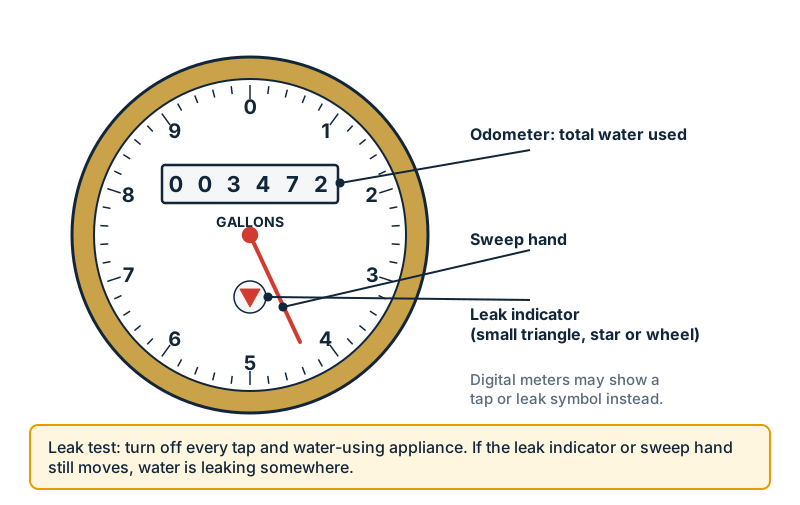
Turn off every tap, then watch the meter's leak indicator. If it turns, water is escaping somewhere, possibly from a pipe shifted by the flood.
Inside or outside
Close the main shut-off at the house. If the indicator stops, the leak is inside. If it keeps moving, the leak is likely in the line between the meter and the house.
Under sinks and cabinets
Floodwater can loosen connections and soak cabinet floors. Check supply lines and drain traps, and leave doors open so cabinets dry out.
Get help
Note what you've found and send it with your request. See storm and flood repairs or hidden leaks.
Outdoor lines
Walk the yard looking for new wet spots, sinking ground or water bubbling up near the meter box. Uprooted trees can break lines underground. Note the location of anything you find for the plumber.
Write it down
Make a short list of what works, what doesn't and what the floodwater reached. It helps the plumber plan the visit and is useful for insurance.
More plumbing guides
Request a plumber
Repairs, renovations and new projects. Tell us what you need and we'll pass it straight to a plumber, who will call you to go over the job and give you a quote.
- Plumbing repairs, renovations and new projects
- Beaumont and the Golden Triangle towns
- Get a quote before any work starts
Plumbing problem in Beaumont?
Send a request and a plumber will get in touch. Requests answered 7 days a week.
Prefer email? [email protected]